
Cash is King ― What Travelers Should Know About Money in Japan
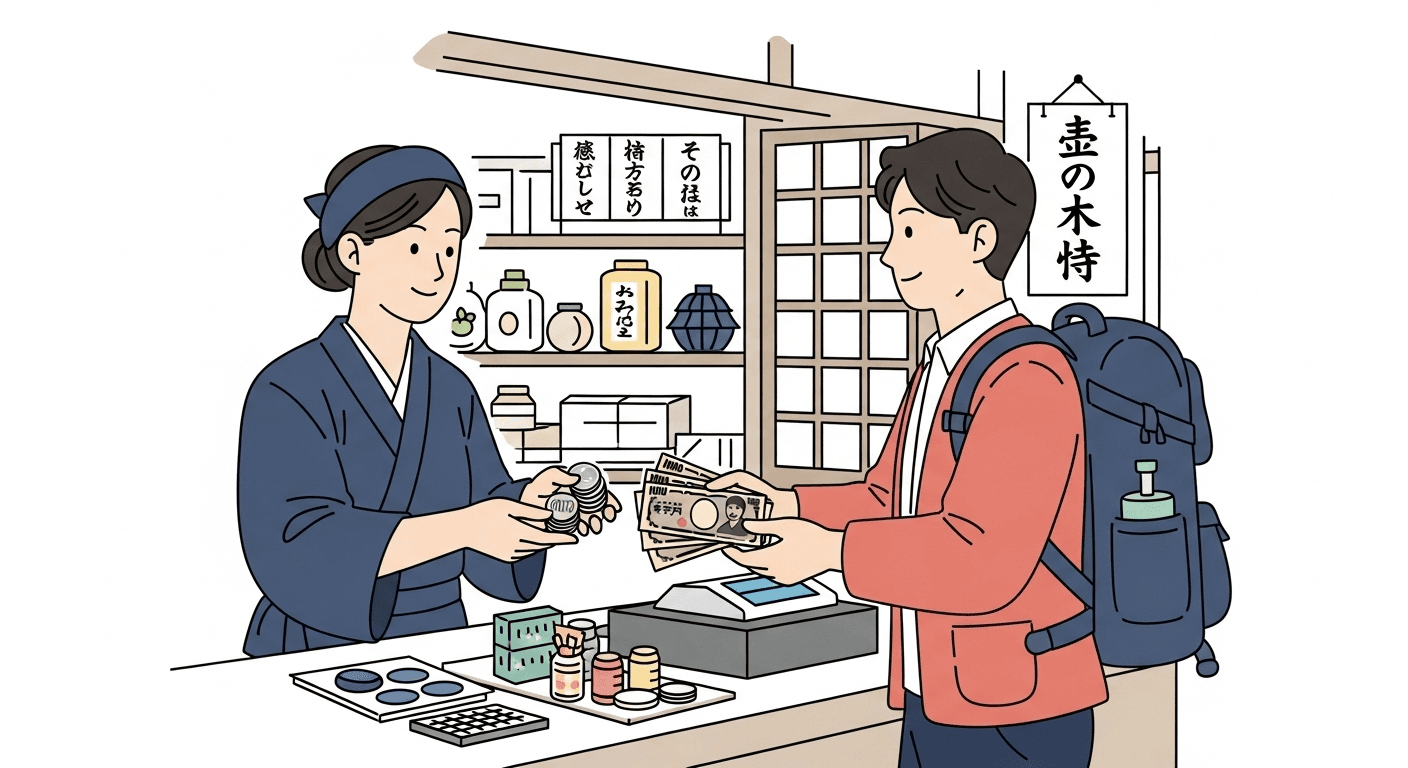
One surprising aspect for travelers visiting Japan is that cash still plays a major role in daily life. While credit cards and electronic payments are widely accepted in hotels, department stores, and chain shops in big cities, many rural areas and small businesses still operate on cash only.
Why Cash is Common
Japan is very safe, and carrying cash is generally worry-free. Historically, cash payments have been widely accepted. Additionally, introducing credit card or electronic payment systems can be costly, so small restaurants and local shops often continue to operate with cash only.
Situations Where Cash is Often Needed
Rural Restaurants and Lodgings
Small inns and local eateries often do not accept cards.Food Stalls and Markets
Cash is the standard method of payment. Coins are especially useful at touristy food stalls.Temples and Shrines
Offerings, charms, and other purchases are mostly paid in cash.
Recommended Cash to Carry
1,000-yen bills
Convenient for small purchases and ticket machines.500-yen coins
Handy for vending machines, food stalls, and shrines. Always carry a few while traveling.
Traveler Tips
It’s safest to have a balance of cash and cards. If visiting rural areas, exchange and carry extra cash. ATMs may not always be available 24 hours, so plan withdrawals in advance.
Summary
While cashless payments are growing in Japan, cash is still the main method in rural and small-scale shops. With 1,000-yen bills and 500-yen coins on hand, travelers can enjoy a smooth and worry-free experience.